
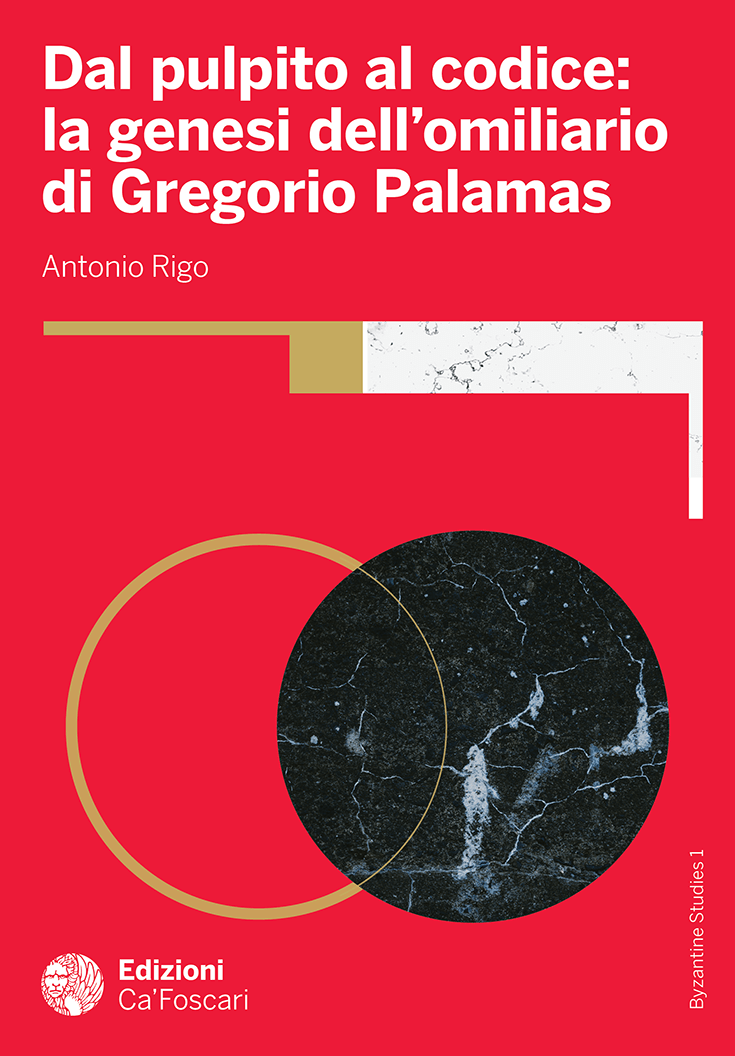
Book information
- Publisher
- Edizioni Ca' Foscari
- Publication
- Published 22 April 2026
- Place
- Venice, Italy
- Series
- Byzantine Studies
- Catalogue record
- View in the catalogue
Abstract
The book, dedicated to Gregory Palamas, one of the central figures in Byzantium history and literature and also in the philosophical-theological debates up to the contemporary age, presents him at work as an author but also as an editor of his own writings. Studied here is the third volume of his works that he personally edited, the history of this collection of homiletical and spiritual works, starting from the author’s own manuscript, and its transformation, based on pre-existing collections of the Patriarchate of Constantinople, into a homiliary that became central in the late Byzantine and post-Byzantine era.
Where its authors and editors are based
Countries of the institutions the book's authors, editors and chapter authors were affiliated to when it was published.
- AUTHORS / EDITORS
- CITATIONS Phase 2
- USAGE Phase 3
| Country | Authors / editors |
|---|---|
| Italy | 1 |
About this data
These figures cover 1 work. Each value comes from the most trusted source that has it; a correction made by OBC staff outranks every source.
| Source | Confidence | Works |
|---|---|---|
| Thoth | 90 / 100 | 1 |
| Works with a publication date | 100% |
|---|---|
| Works with a DOI | 100% |
| Works with a funder recorded | 0% |
| Authors with an affiliation | 100% |
| Affiliations matched to an institution (ROR) | 100% |
| Affiliations with a country | 100% |
Countries come from the institution each author was affiliated to when they published, as recorded in ROR. A country is never guessed, so authors without a matched institution are not counted on the maps.
Funders come from OpenAlex for articles and Thoth for books, where publishers recorded them. Most works record none, so a funder's figures show what is recorded, not everything it funded.
Chapters count as works: their authors and editors, and the countries of their institutions, are in every figure where Thoth records an affiliation for them.
Citations (Phase 2) and usage (Phase 3) are not collected yet.