
Book information
- Publisher
- punctum books
- Publication
- Published 11 August 2026
- Place
- Earth, Milky Way
- Catalogue record
- View in the catalogue
Abstract
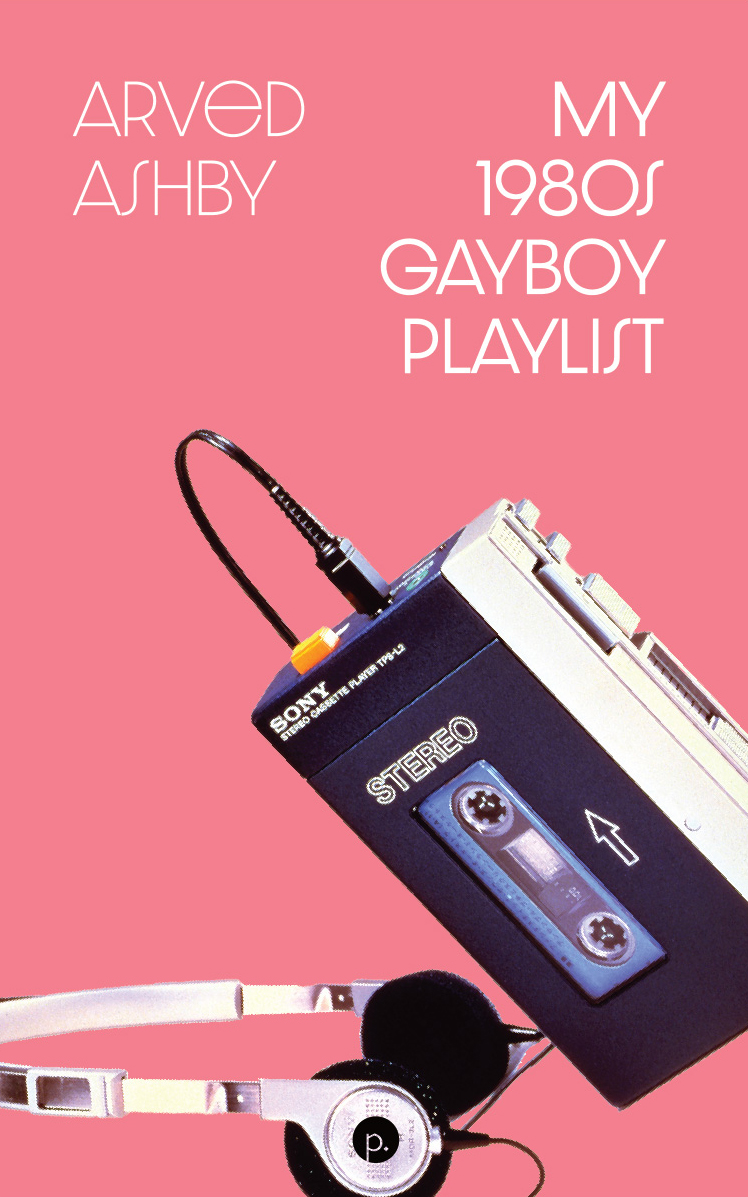
In this remarkably intimate book, My 1980s Gayboy Playlist, award-winning music writer Arved Ashby muses over pieces that impacted his sexual and musical awakenings as a troubled gay adolescent—pieces by Tchaikovsky, Chopin, Beethoven, Anton Bruckner, Alban Berg, Prince, Kurt Cobain, and Tom Petty.
Ashby shares memories both intimate and far-ranging, but My 1980s Gayboy Playlist is not a memoir. Instead of trying to amplify an outwardly uneventful life, the author reengages with and renegotiates eight still-simmering touchpoints—some old musical flames, a few abusive relationships among them. Ashby focuses on desire as it spilled messily across different avenues of expression, seeking connections between erotic experience and musical passion.
For Ashby, as a high school student in a small, rural Midwestern town in the early 1980s, choosing Alban Berg records over Van Halen counted as a perversion. When he recognized Tchaikovsky’s melodic fixations and Prince’s and Chopin’s musical fires, he better understood his own kinks. As an inadequate piano student and a shy virgin on tricyclic psych meds, his lack of physical success taught him the limitations of the body but also showed the capaciousness of queer failure.
It was music that showed him how queerness insists on misappropriation, mishearing, and reading against the grain. Musicality, like sexual expression, amounts to a kind of role-playing— involving penetration and violation of identity as well as validations of the self. The author’s queer musical loves have shown him the vital beauty of muck, unreason, and noise, and as an imaginative writer, Ashby offers the liquid self-reflexivity of Proust and the auto-theory provocations of Maggie Nelson, Paul Preciado, and McKenzie Wark. His prose is poetic and playful, and now and again chaotic. He outs himself in and through his work, with humor and radical intimacy.
My 1980s Gayboy Playlist ultimately illuminates what queer theorist Leo Bersani called the gayboy’s inelegant “apprenticeship in desiring.” Ashby’s closest partners growing up were fantasy, seclusion, and music-dependency, and he found his awkward bliss at the start of the era that witnessed AIDS and the rise of the Moral Majority. In Ashby’s early exurban environment, gayness was a thing feared, because unseen and unfathomed, but his musical intimacies made his personal closet endurable. They also helped him to survive his mis-education, to overcome failures of expression, and to craft a sexual awakening into something more rich and more strange.
Where its authors and editors are based
Countries of the institutions the book's authors, editors and chapter authors were affiliated to when it was published.
- AUTHORS / EDITORS
- CITATIONS Phase 2
- USAGE Phase 3
| Country | Authors / editors |
|---|---|
| United States | 1 |
About this data
These figures cover 1 work. Each value comes from the most trusted source that has it; a correction made by OBC staff outranks every source.
| Source | Confidence | Works |
|---|---|---|
| Thoth | 90 / 100 | 1 |
| Works with a publication date | 100% |
|---|---|
| Works with a DOI | 100% |
| Works with a funder recorded | 0% |
| Authors with an affiliation | 100% |
| Affiliations matched to an institution (ROR) | 100% |
| Affiliations with a country | 100% |
Countries come from the institution each author was affiliated to when they published, as recorded in ROR. A country is never guessed, so authors without a matched institution are not counted on the maps.
Funders come from OpenAlex for articles and Thoth for books, where publishers recorded them. Most works record none, so a funder's figures show what is recorded, not everything it funded.
Chapters count as works: their authors and editors, and the countries of their institutions, are in every figure where Thoth records an affiliation for them.
Citations (Phase 2) and usage (Phase 3) are not collected yet.