
Book view
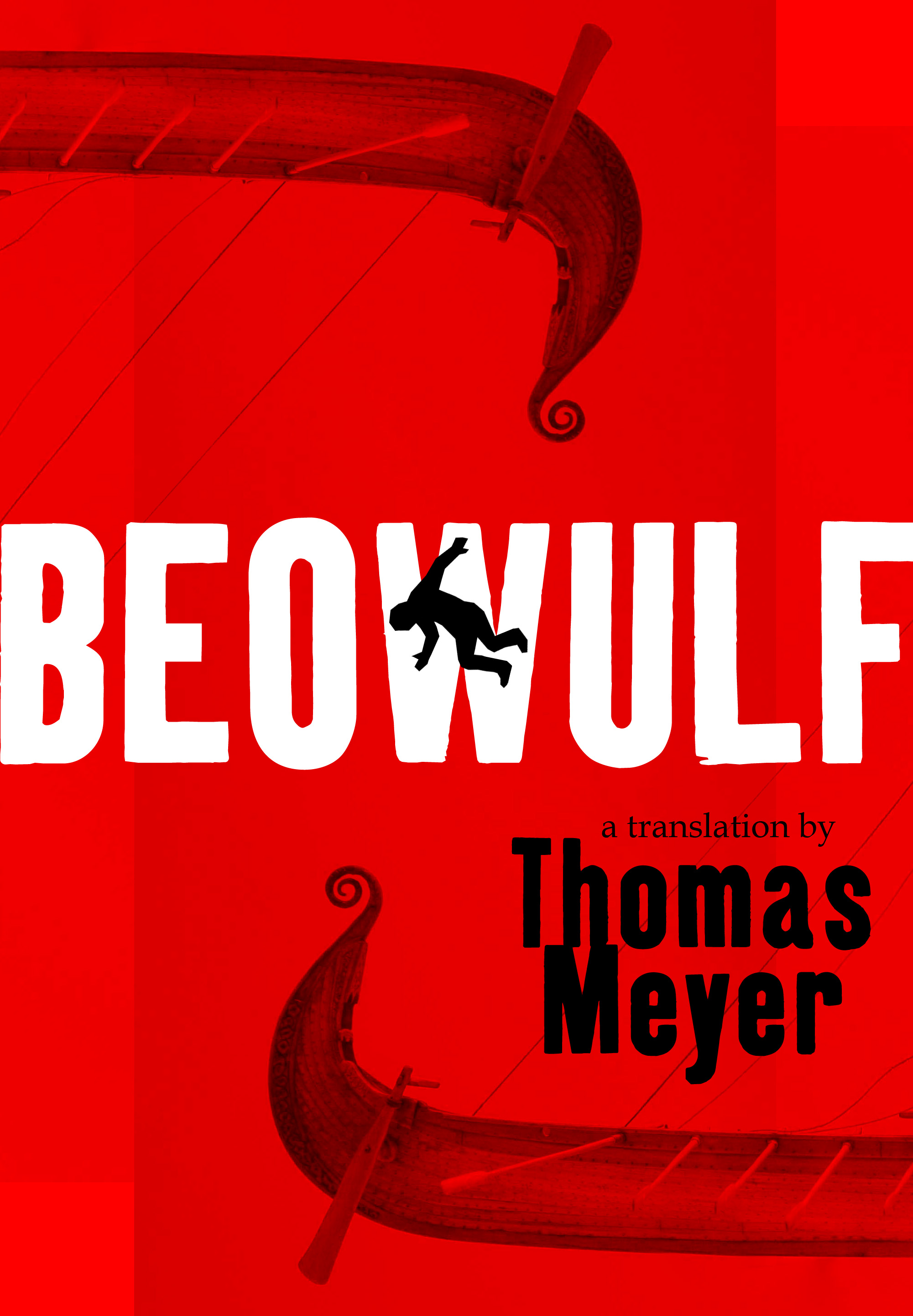
Beowulf
A Translation
Edited by David Hadbawnik; by Thomas Meyer, Daniel C. Remein, David Hadbawnik
Book information
- Publisher
- punctum books
- Publication
- Published 25 August 2012
- Place
- Brooklyn, NY
- Catalogue record
- View in the catalogue
Abstract
Many modern Beowulf translations, while excellent in their own ways, suffer from what Kathleen Biddick might call “melancholy” for an oral and aural way of poetic making. By and large, they tend to preserve certain familiar features of Anglo-Saxon verse as it has been constructed by editors, philologists, and translators: the emphasis on caesura and alliteration, with diction and syntax smoothed out for readability. The problem with, and the paradox of this desired outcome, especially as it concerns Anglo-Saxon poetry, is that we are left with a document that translates an entire organizing principle based on oral transmission (and perhaps composition) into a visual, textual realm of writing and reading. The sense of loss or nostalgia for the old form seems a necessary and ever-present shadow over modern Beowulfs.
What happens, however, when a contemporary poet, quite simply, doesn’t bother with any such nostalgia? When the entire organizational apparatus of the poem—instead of being uneasily approximated in modern verse form—is itself translated into a modern organizing principle, i.e., the visual text? This is the approach that poet Thomas Meyer takes; as he writes,
A glance anywhere in Meyer’s text demonstrates the stunning results. One place he turns it to especially good effect is the fight with Grendel in Fit 11, transforming the famously hyper-condensed syntax of the scene from a discouraging challenge for the translator into a visually pleasing strength:
"The eyes of Hygelac’s kin watched the wicked raider
execute his quick attack:
without delay,
snatching his first chance,
a sleeping warrior,
he tore him in two,
chomped muscle, sucked veins’
gushing blood,
gulped down his morsel, the dead man,
chunk by chunk,
hands, feet & all.
& then
footstephandclawfiendreachmanbedquicktrick
beastarmpainclampnewnotknownheartrunflesho
feargetawaygonowrunrun
never before had
sinherd feared anything so."
Here the reader is confronted with the words themselves running together, as if in panic, in much the same way that the original passage seems in such a rush to tell the story of the battle that bodies become confused. This is just one example of the adventurous and provocative angle on Beowulf to which Meyer introduces us. His Beowulf—completed in 1972 but never before published—is sure to stretch readers’ ideas about what is possible in terms of translating Anglo-Saxon poetry, as well as provide new insights on the poem itself.
Where its authors and editors are based
Countries of the institutions the book's authors, editors and chapter authors were affiliated to when it was published.
- AUTHORS / EDITORS
- CITATIONS Phase 2
- USAGE Phase 3
| Country | Authors / editors |
|---|---|
| United States | 2 |
About this data
These figures cover 1 work. Each value comes from the most trusted source that has it; a correction made by OBC staff outranks every source.
| Source | Confidence | Works |
|---|---|---|
| Thoth | 90 / 100 | 1 |
| Works with a publication date | 100% |
|---|---|
| Works with a DOI | 100% |
| Works with a funder recorded | 0% |
| Authors with an affiliation | 75% |
| Affiliations matched to an institution (ROR) | 100% |
| Affiliations with a country | 100% |
Countries come from the institution each author was affiliated to when they published, as recorded in ROR. A country is never guessed, so authors without a matched institution are not counted on the maps.
Funders come from OpenAlex for articles and Thoth for books, where publishers recorded them. Most works record none, so a funder's figures show what is recorded, not everything it funded.
Chapters count as works: their authors and editors, and the countries of their institutions, are in every figure where Thoth records an affiliation for them.
Citations (Phase 2) and usage (Phase 3) are not collected yet.