
Book information
- Publisher
- punctum books
- Publication
- Published 2 August 2015
- Place
- Brooklyn, NY
- Catalogue record
- View in the catalogue
Abstract
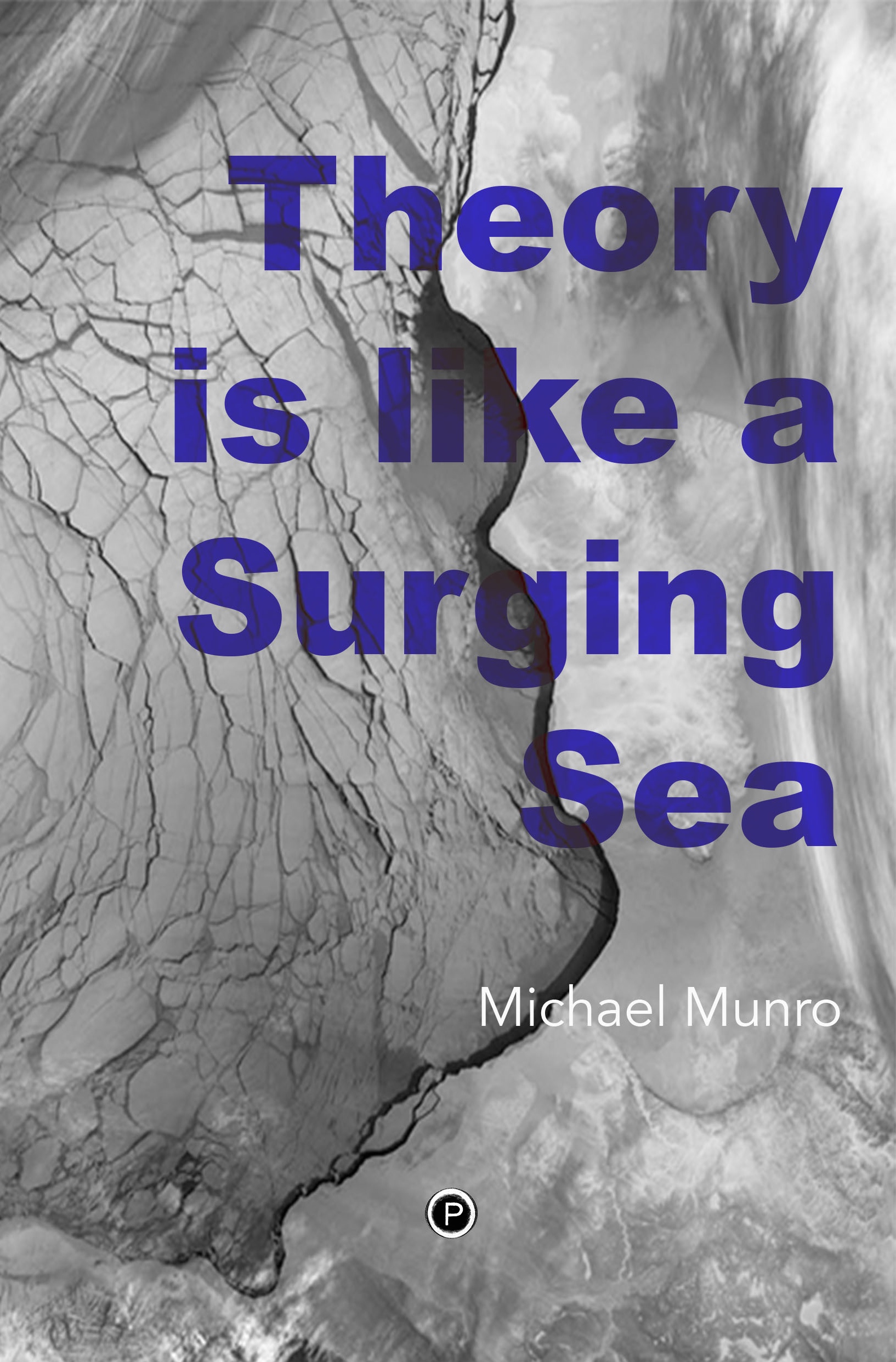
In a 1917 letter to Gershom Scholem, Walter Benjamin writes, “Theory is like a surging sea.” This small book takes more than its title from that line—it takes that line as a point of departure in Erich Auerbach’s sense, an Ansatzpunkt, as a compositional principle so that what follows can be read in its entirety as a gloss on the remainder of Benjamin’s sentence: “Theory is like a surging sea, but the only thing that matters to the wave […] is to surrender itself to its motion in such a way that it crests and breaks.” That motion, in the pages to follow, takes up in its sweep two threads: it folds an episodic meditation on the negative and the problematic into a series of singular interrogations exemplary of the positive being of the problematic, the objective being of problems and questions, in a movement of implication and explication between poetry and philosophy in the tradition of what’s come to be known as theory. Theory is like a surging sea because it’s as part of a revolutionary tradition that it crests and breaks.
Where its authors and editors are based
Countries of the institutions the book's authors, editors and chapter authors were affiliated to when it was published.
- AUTHORS / EDITORS
- CITATIONS Phase 2
- USAGE Phase 3
No affiliations with a known country in these years yet.
About this data
These figures cover 1 work. Each value comes from the most trusted source that has it; a correction made by OBC staff outranks every source.
| Source | Confidence | Works |
|---|---|---|
| Thoth | 90 / 100 | 1 |
| Works with a publication date | 100% |
|---|---|
| Works with a DOI | 100% |
| Works with a funder recorded | 0% |
| Authors with an affiliation | 0% |
Countries come from the institution each author was affiliated to when they published, as recorded in ROR. A country is never guessed, so authors without a matched institution are not counted on the maps.
Funders come from OpenAlex for articles and Thoth for books, where publishers recorded them. Most works record none, so a funder's figures show what is recorded, not everything it funded.
Chapters count as works: their authors and editors, and the countries of their institutions, are in every figure where Thoth records an affiliation for them.
Citations (Phase 2) and usage (Phase 3) are not collected yet.