
Book information
- Publisher
- punctum books
- Publication
- Published 3 February 2026
- Place
- Earth, Milky Way
- Catalogue record
- View in the catalogue
Abstract
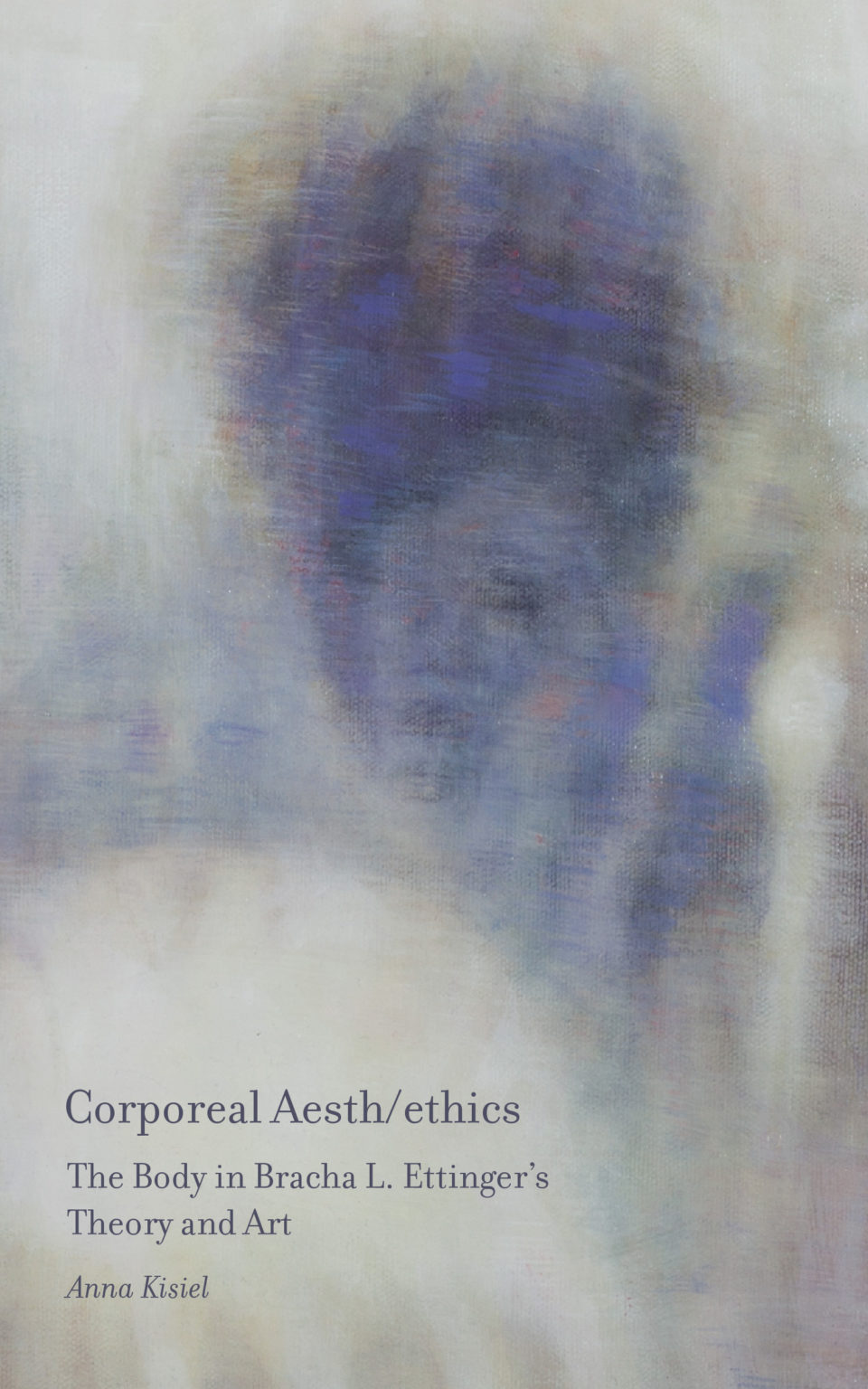
Can we think of an ethics that originates in corporeality, and not in codified or symbolic systems? In Corporeal Aesth/ethics, the body resurfaces as a central category of Bracha L. Ettinger’s theory and art, as well as an interpretive key that allows us to assume ethical responsibility for an Other who is not abstract, or distant, or total. Ettinger’s matrixial theory, a deeply feminist psycho-analytical system, ventures beyond the models of subjectivity based on separation and lack, and thus it helps us rethink togetherness and our own humanity.
Corporeal Aesth/ethics explores how we become subjects not through a series of cuts, but through an encounter with radical openness, modeled upon the intrauterine/pregnancy period. Even though the theorized encounter relies on caring, carrying, and sharing, it is far from pleasant and safe, as we might assume. Indeed, some of the knowledge communicated in this phase of subjectivity-becoming may turn out to be painful, even traumatic. It is this profoundly corporeal encounter, Kisiel contends, that makes it possible to conceive of the body as a site and source of ethics. Envisioned through the lens of the matrixial, a subject (never alone, always in severality) reaches new modes of intimacy and hospitality, occasioned by our universally shared, originary experience of becoming with-in the maternal body.
A psychoanalyst, theoretician, and feminist, Ettinger is also an artist. Sharing Ettinger’s conviction that “painting and theory are not different aspects that attest to the same thing, but are rather differentiated levels of working-through,” Kisiel maps the entanglements of the (feminine/motherly) body in both dimensions of Ettinger’s work. In five chapters, this book delineates the project of Ettinger’s corporeal aesth/ethics. It contextualizes the matrixial body, analyzes its humanizing potential, and proposes dialogues of Ettinger’s work with feminism, theology, and Holocaust studies.
Where its authors and editors are based
Countries of the institutions the book's authors, editors and chapter authors were affiliated to when it was published.
- AUTHORS / EDITORS
- CITATIONS Phase 2
- USAGE Phase 3
| Country | Authors / editors |
|---|---|
| Poland | 1 |
About this data
These figures cover 1 work. Each value comes from the most trusted source that has it; a correction made by OBC staff outranks every source.
| Source | Confidence | Works |
|---|---|---|
| Thoth | 90 / 100 | 1 |
| Works with a publication date | 100% |
|---|---|
| Works with a DOI | 100% |
| Works with a funder recorded | 0% |
| Authors with an affiliation | 100% |
| Affiliations matched to an institution (ROR) | 100% |
| Affiliations with a country | 100% |
Countries come from the institution each author was affiliated to when they published, as recorded in ROR. A country is never guessed, so authors without a matched institution are not counted on the maps.
Funders come from OpenAlex for articles and Thoth for books, where publishers recorded them. Most works record none, so a funder's figures show what is recorded, not everything it funded.
Chapters count as works: their authors and editors, and the countries of their institutions, are in every figure where Thoth records an affiliation for them.
Citations (Phase 2) and usage (Phase 3) are not collected yet.