
Book information
- Publisher
- punctum books
- Publication
- Published 9 July 2016
- Place
- Earth, Milky Way
- Catalogue record
- View in the catalogue
Abstract
What is soul? Can it be forfeited? Can it be traded away? If it can, what would ensue? What consequences would follow from loss of soul — for the individual, for society, for the earth?
In the early nineteenth century, Goethe’s hero, Faust, became a defining archetype of modernity, a harbinger of the existential possibilities and moral complexities of the modern condition. But today the dire consequences of the Faustian pact with the devil are becoming alarmingly visible. In light of this, how would Goethe’s arguably flawed drama play out in a 21st-century century setting? Would a contemporary Faust sign up to a demonic deal? Indeed what, in the wake of two hundred years of social and economic development, would be left for the devil to offer him? A contemporary Faust would already possess everything the original Faust in his ascetic cloister lacked — affluence and mobility; celebrity and worldly influence; access to information; religious choice; sexual freedom and the availability of women — though women, it must be noted, currently also partake of that same freedom. The only thing a present-day Faust would lack would be his soul. Would he miss it? Does soul even exist? If it does, it would of course be the one thing the devil could not bestow. So from what or whom could Faust retrieve it? What, in a word, would a contemporary Faust most deeply desire?
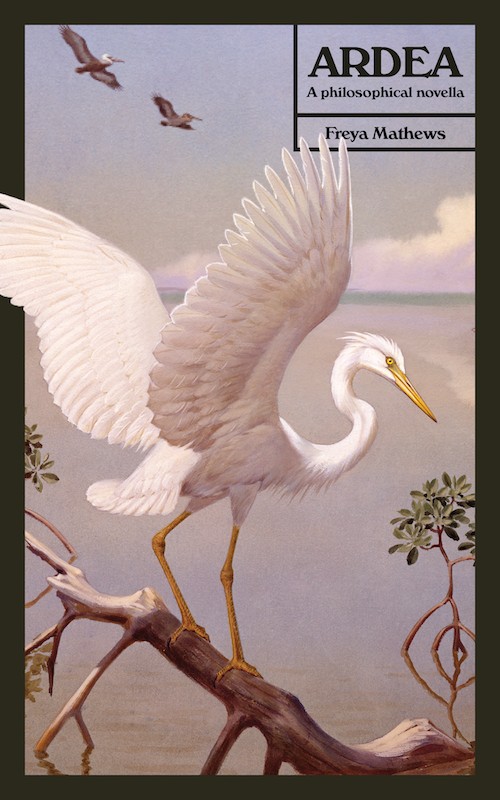
In pursuit of these questions, Ardea engages a familiar but possibly faulty archetype, that of Faust, with an unfamiliar one, that of the white heron, borrowed from a short story of the same name by nineteenth-century American author, Sarah Orne Jewett. In Jewett’s tale, a soul-pact of an entirely different kind from that entered into by Faust is proposed. It is a pact with the wild, a pledge of fealty, of non-forfeiture, that promises to redraw the violent psycho-sexual and psycho-spiritual patterns that have underpinned modernity. How would a present-day heir to the Faustian tradition, ingrained with the habit of entitlement but also burdened with the consequences of the old pact, respond to the new proposition?
Where its authors and editors are based
Countries of the institutions the book's authors, editors and chapter authors were affiliated to when it was published.
- AUTHORS / EDITORS
- CITATIONS Phase 2
- USAGE Phase 3
| Country | Authors / editors |
|---|---|
| Australia | 1 |
About this data
These figures cover 1 work. Each value comes from the most trusted source that has it; a correction made by OBC staff outranks every source.
| Source | Confidence | Works |
|---|---|---|
| Thoth | 90 / 100 | 1 |
| Works with a publication date | 100% |
|---|---|
| Works with a DOI | 100% |
| Works with a funder recorded | 0% |
| Authors with an affiliation | 100% |
| Affiliations matched to an institution (ROR) | 100% |
| Affiliations with a country | 100% |
Countries come from the institution each author was affiliated to when they published, as recorded in ROR. A country is never guessed, so authors without a matched institution are not counted on the maps.
Funders come from OpenAlex for articles and Thoth for books, where publishers recorded them. Most works record none, so a funder's figures show what is recorded, not everything it funded.
Chapters count as works: their authors and editors, and the countries of their institutions, are in every figure where Thoth records an affiliation for them.
Citations (Phase 2) and usage (Phase 3) are not collected yet.