
Book information
- Publisher
- Open Book Publishers
- Publication
- Published 31 July 2017
- Place
- Cambridge, UK
- Catalogue record
- View in the catalogue
Abstract
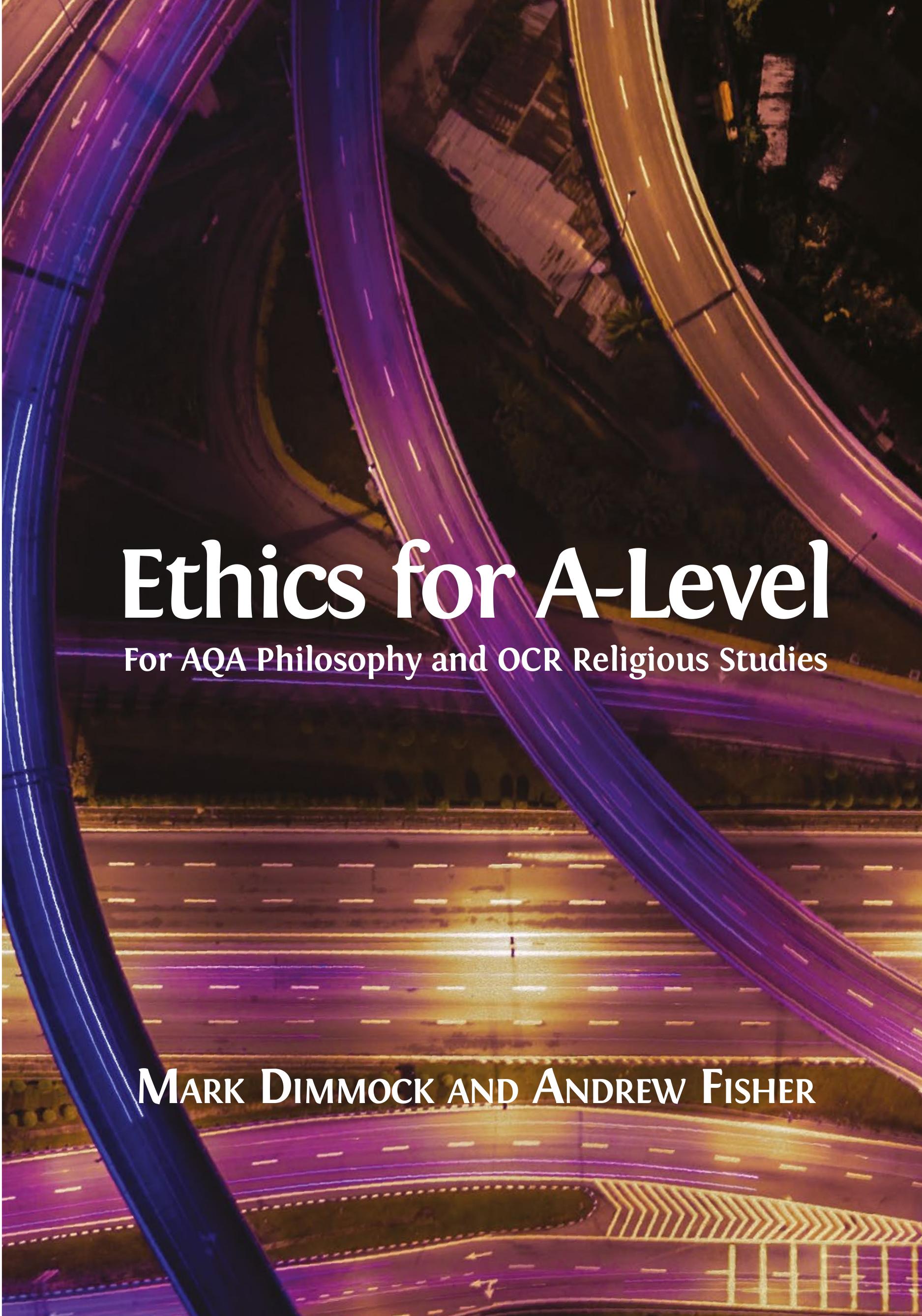
What does pleasure have to do with morality? What role, if any, should intuition have in the formation of moral theory? If something is ‘simulated’, can it be immoral?
This accessible and wide-ranging textbook explores these questions and many more. Key ideas in the fields of normative ethics, metaethics and applied ethics are explained rigorously and systematically, with a vivid writing style that enlivens the topics with energy and wit. Individual theories are discussed in detail in the first part of the book, before these positions are applied to a wide range of contemporary situations including business ethics, sexual ethics, and the acceptability of eating animals. A wealth of real-life examples, set out with depth and care, illuminate the complexities of different ethical approaches while conveying their modern-day relevance.
This concise and highly engaging resource is tailored to the Ethics components of AQA Philosophy and OCR Religious Studies, with a clear and practical layout that includes end-of-chapter summaries, key terms, and common mistakes to avoid. It should also be of practical use for those teaching Philosophy as part of the International Baccalaureate.
Ethics for A-Level is of particular value to students and teachers, but Fisher and Dimmock’s precise and scholarly approach will appeal to anyone seeking a rigorous and lively introduction to the challenging subject of ethics.
Chapters
Where its authors and editors are based
Countries of the institutions the book's authors, editors and chapter authors were affiliated to when it was published.
- AUTHORS / EDITORS
- CITATIONS Phase 2
- USAGE Phase 3
| Country | Authors / editors |
|---|---|
| United Kingdom | 1 |
About this data
These figures cover 17 works. Each value comes from the most trusted source that has it; a correction made by OBC staff outranks every source.
| Source | Confidence | Works |
|---|---|---|
| Thoth | 90 / 100 | 17 |
| Works with a publication date | 100% |
|---|---|
| Works with a DOI | 100% |
| Works with a funder recorded | 0% |
| Authors with an affiliation | 50% |
| Affiliations matched to an institution (ROR) | 100% |
| Affiliations with a country | 100% |
Countries come from the institution each author was affiliated to when they published, as recorded in ROR. A country is never guessed, so authors without a matched institution are not counted on the maps.
Funders come from OpenAlex for articles and Thoth for books, where publishers recorded them. Most works record none, so a funder's figures show what is recorded, not everything it funded.
Chapters count as works: their authors and editors, and the countries of their institutions, are in every figure where Thoth records an affiliation for them.
Citations (Phase 2) and usage (Phase 3) are not collected yet.