
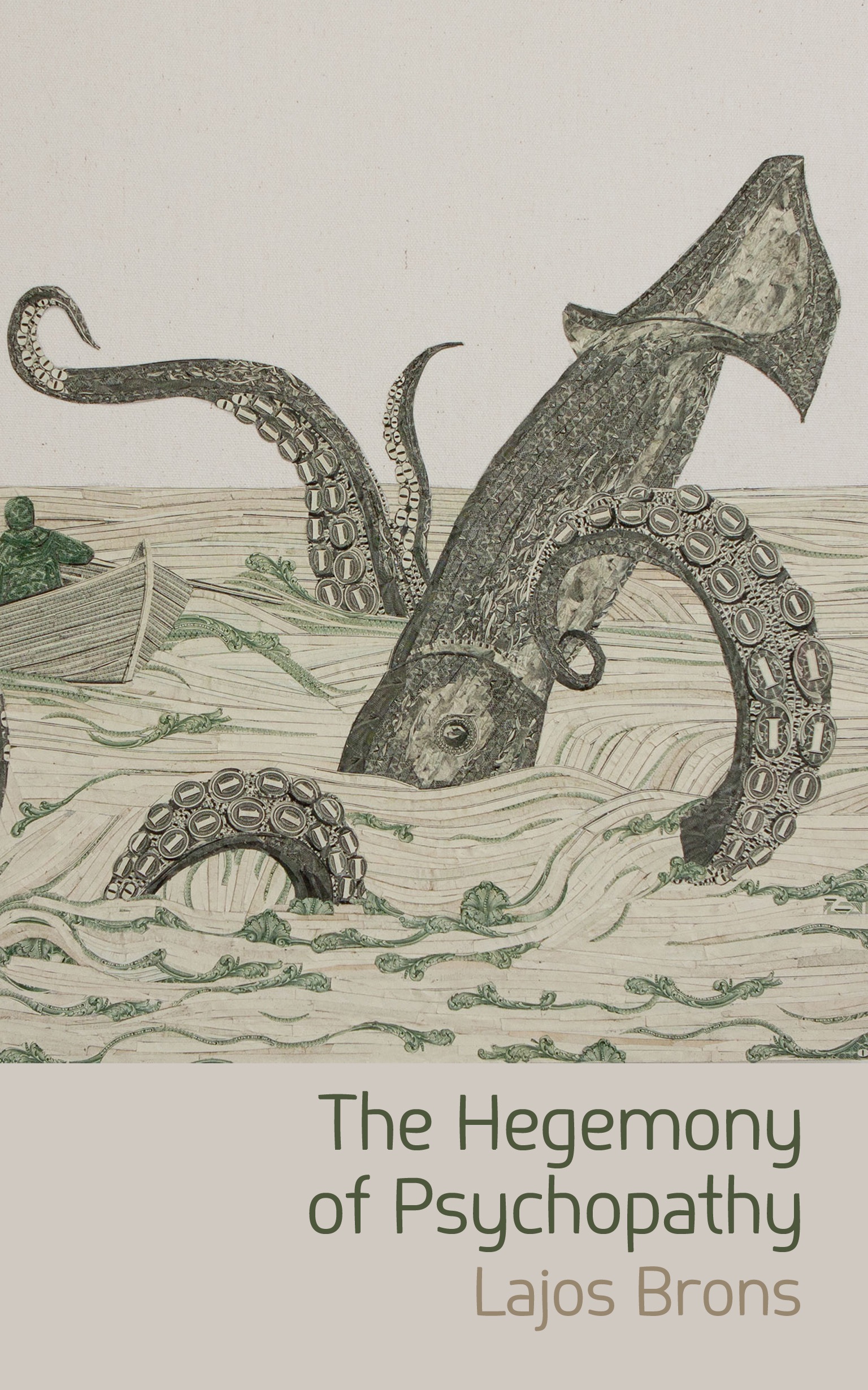
Book information
- Publisher
- punctum books
- Publication
- Published 19 September 2017
- Place
- Earth, Milky Way
- Catalogue record
- View in the catalogue
Abstract
Any social and political arrangement depends on acceptance. If a substantial part of a people does not accept the authority of its rulers, then those can only remain in power by means of force, and even that use of force needs to be accepted to be effective. Gramsci called this acceptance of the socio-political status quo “hegemony.” Every stable state relies primarily on hegemony as a source of control. Hegemony works through the dissemination of values and beliefs that create acceptance and that serve the interests of the state and/or the ruling elite (the “hegemones”). Hegemony is most efficient if it remains invisible. A key hegemonic belief is the idea that there is no alternative to the current socio-political status quo or that the way things are is “natural.” The current hegemony – that is, the set of values and beliefs that bolster the current socio-political status quo – is a hegemony of psychopathy: it promotes “cultural psychopathy” and destroys empathy and compassion, thus threatening everything that makes us human.
The hegemony of psychopathy is responsible for massive human suffering. It must be fought and replaced with a counter-hegemonic set of values and beliefs that promote compassion and care. Fighting hegemony requires fighting the “pillars” that support it. Most important among these are the mass media and culture industry, and mainstream economics. The former is responsible for a continuous stream of hegemonic propaganda; the latter – among others – for providing a pseudo-scientific justification for the false belief that there is no alternative. The Hegemony of Psychopathy concludes with some considerations on tactics and strategy in the struggle against the hegemony of psychopathy, but does not – and cannot – offer any concrete advice.
Where its authors and editors are based
Countries of the institutions the book's authors, editors and chapter authors were affiliated to when it was published.
- AUTHORS / EDITORS
- CITATIONS Phase 2
- USAGE Phase 3
| Country | Authors / editors |
|---|---|
| Japan | 1 |
About this data
These figures cover 1 work. Each value comes from the most trusted source that has it; a correction made by OBC staff outranks every source.
| Source | Confidence | Works |
|---|---|---|
| Thoth | 90 / 100 | 1 |
| Works with a publication date | 100% |
|---|---|
| Works with a DOI | 100% |
| Works with a funder recorded | 0% |
| Authors with an affiliation | 100% |
| Affiliations matched to an institution (ROR) | 100% |
| Affiliations with a country | 100% |
Countries come from the institution each author was affiliated to when they published, as recorded in ROR. A country is never guessed, so authors without a matched institution are not counted on the maps.
Funders come from OpenAlex for articles and Thoth for books, where publishers recorded them. Most works record none, so a funder's figures show what is recorded, not everything it funded.
Chapters count as works: their authors and editors, and the countries of their institutions, are in every figure where Thoth records an affiliation for them.
Citations (Phase 2) and usage (Phase 3) are not collected yet.