
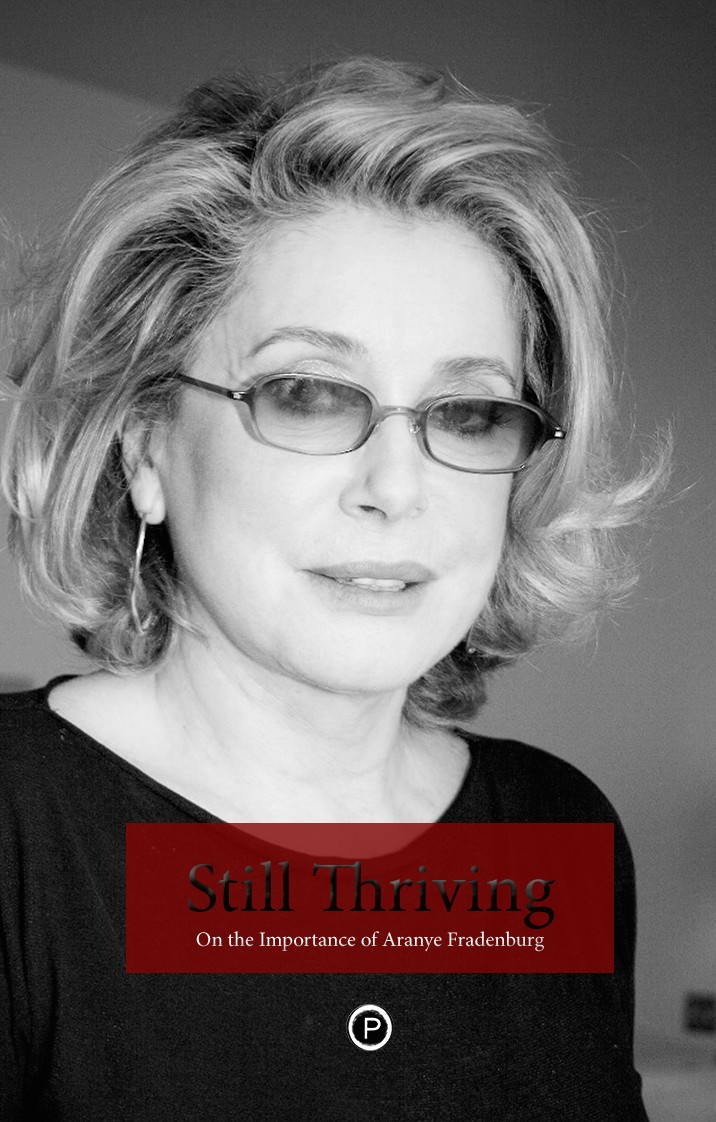
Book information
- Publisher
- punctum books
- Publication
- Published 9 April 2015
- Place
- Brooklyn, NY
- Catalogue record
- View in the catalogue
Abstract
The work of L.O. Aranye Fradenburg, especially her psychoanalytic criticism of Chaucer, and her formulations of discontinuist historical approaches to the Middle Ages, has been extremely influential within medieval studies for the past 20 or so years. More recently she has been focusing on more broad defenses of the humanities, especially with regard to the valuable role of literary studies relative to the arts of everyday living, eudaimonia [flourishing], ethical community, and well-being, and also on psychoanalysis itself as a “liberal art.” Relationality, intersubjectivity, aliveness, resilience, care of the self and also of others, adaptive flexibility, playfulness, shared attention, companionship, healing, and thriving seem, increasingly, to be the key watchwords and concerns of Fradenburg’s work, and at the same time, the so-called “literary” mode is still central to these concerns, such that, as Fradenburg has written, “Interpretation and relationality depend on one another because all relationships are unending processes of interpretation and expression, listening and signifying. In turn, sentience assists relationality: we can’t thrive and probably can’t survive without minds open to possibility, capable of sensing and interpreting the tiniest shifts in, e.g., pitch and tone.”
This small volume features short essays and personal reflections on the importance of Fradenburg’s career, as teacher and scholar, and also on the valuable role(s) that her work, and medieval studies more generally, has played and might still play in the defense of the humanities as essential to living and thriving.
Chapters
| Chapter | Author | Institution at publication |
|---|---|---|
| Preface | Eileen A. Joy | Southern Illinois University Edwardsville |
| Come Flourish with Me | Randy P. Schiff | University at Buffalo, State University of New York |
| Critical Thriving | Kathy Lavezzo | University of Iowa |
| Frontmatter | Eileen A. Joy | |
| living / riddle | Daniel C. Remein | University of Massachusetts Boston |
| More Blue Doors | Patricia Clare Ingham | Indiana University |
| Provision and Provisionality | Julie Orlemanski | University of Chicago |
| Sacrificial Enjoyment | Paul Megna | Purchase College |
Where its authors and editors are based
Countries of the institutions the book's authors, editors and chapter authors were affiliated to when it was published.
- AUTHORS / EDITORS
- CITATIONS Phase 2
- USAGE Phase 3
| Country | Authors / editors |
|---|---|
| United States | 7 |
About this data
These figures cover 9 works. Each value comes from the most trusted source that has it; a correction made by OBC staff outranks every source.
| Source | Confidence | Works |
|---|---|---|
| Thoth | 90 / 100 | 9 |
| Works with a publication date | 100% |
|---|---|
| Works with a DOI | 100% |
| Works with a funder recorded | 0% |
| Authors with an affiliation | 89% |
| Affiliations matched to an institution (ROR) | 100% |
| Affiliations with a country | 100% |
Countries come from the institution each author was affiliated to when they published, as recorded in ROR. A country is never guessed, so authors without a matched institution are not counted on the maps.
Funders come from OpenAlex for articles and Thoth for books, where publishers recorded them. Most works record none, so a funder's figures show what is recorded, not everything it funded.
Chapters count as works: their authors and editors, and the countries of their institutions, are in every figure where Thoth records an affiliation for them.
Citations (Phase 2) and usage (Phase 3) are not collected yet.