
Book view
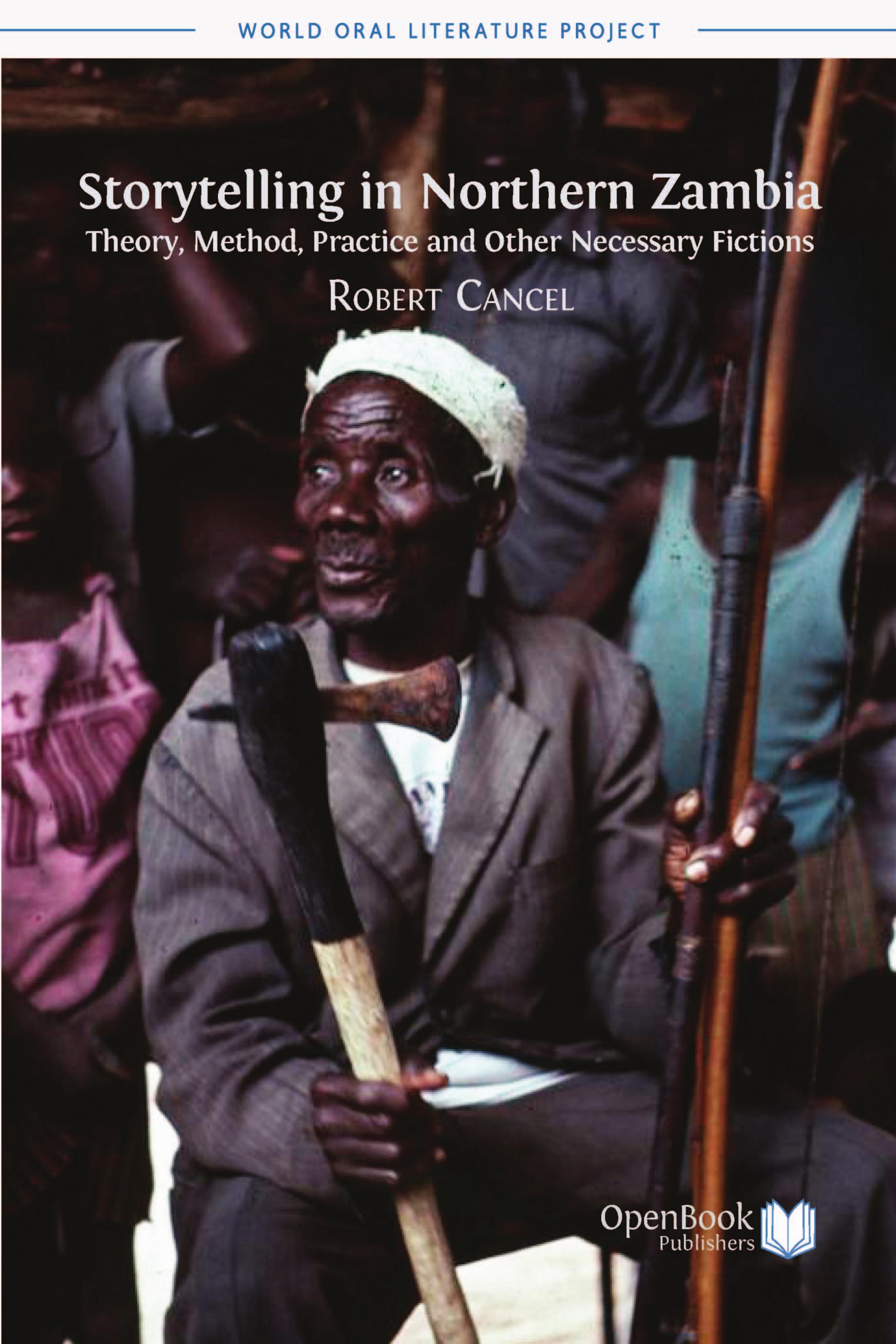
Storytelling in Northern Zambia
Theory, Method, Practice and Other Necessary Fictions
Book information
- Publisher
- Open Book Publishers
- Publication
- Published 15 July 2013
- Place
- Cambridge, UK
- Series
- World Oral Literature Series
- Catalogue record
- View in the catalogue
Abstract
More than just a book, Storytelling in Northern Zambia lets you watch videos of the storytellers while you read. Storytelling plays an important part in the vibrant cultural life of Zambia and in many other communities across Africa. This innovative book provides a collection and analysis of oral narrative traditions as practiced by five Bemba-speaking ethnic groups in Zambia. The integration of newly digitalised audio and video recordings into the text enables the reader to encounter the storytellers themselves and hear their narratives as they were recounted during Robert Cancel’s research trips to Zambia. Robert Cancel's thorough critical interpretation, combined with these newly digitalised audio and video materials, makes Storytelling in Northern Zambia a much needed addition to the slender corpus of African folklore studies that deal with storytelling performance. Cancel threads his way between the complex demands of African fieldwork studies, folklore theory, narrative modes, reflexive description and simple documentation and succeeds in bringing to the reader a set of performers and their performances that are vivid, varied and instructive. He illustrates this living narrative tradition with a wide range of examples, and highlights the social status of narrators and the complex local identities that are at play. Cancel’s innovative study tells us not only about storytelling but sheds light on the study of oral literatures throughout Africa and beyond. Its innovative format, meanwhile, explores new directions in the integration of primary source material into scholarly texts. This book is part of our World Oral Literature Series in conjunction with the World Oral Literature Project.
Chapters
| Chapter | Author | Institution at publication |
|---|---|---|
| Bisa Storytelling: The Politics of Hunting, Beer-Drinks, and Elvis | Robert Cancel | University of California San Diego |
| Chiefs, Tricksters and Christians: Bemba Tales and Lessons | Robert Cancel | University of California San Diego |
| Stories on Demand: A Performance Session Among the Bwile | Robert Cancel | University of California San Diego |
| Telling Tales While Keeping Secrets: Two Lunda Storytelling Sessions | Robert Cancel | University of California San Diego |
| The Tabwa Context: Mature Shifting of Frames and Adolescent Assertion | Robert Cancel | University of California San Diego |
| Writing Oral Narrative: The Role and Description of Self in Recording Living Traditions | Robert Cancel | University of California San Diego |
| Conclusion: Lessons from Frozen Moments | Robert Cancel | University of California San Diego |
Where its authors and editors are based
Countries of the institutions the book's authors, editors and chapter authors were affiliated to when it was published.
- AUTHORS / EDITORS
- CITATIONS Phase 2
- USAGE Phase 3
| Country | Authors / editors |
|---|---|
| United States | 1 |
About this data
These figures cover 8 works. Each value comes from the most trusted source that has it; a correction made by OBC staff outranks every source.
| Source | Confidence | Works |
|---|---|---|
| Thoth | 90 / 100 | 8 |
| Works with a publication date | 100% |
|---|---|
| Works with a DOI | 100% |
| Works with a funder recorded | 0% |
| Authors with an affiliation | 89% |
| Affiliations matched to an institution (ROR) | 100% |
| Affiliations with a country | 100% |
Countries come from the institution each author was affiliated to when they published, as recorded in ROR. A country is never guessed, so authors without a matched institution are not counted on the maps.
Funders come from OpenAlex for articles and Thoth for books, where publishers recorded them. Most works record none, so a funder's figures show what is recorded, not everything it funded.
Chapters count as works: their authors and editors, and the countries of their institutions, are in every figure where Thoth records an affiliation for them.
Citations (Phase 2) and usage (Phase 3) are not collected yet.