
Book view
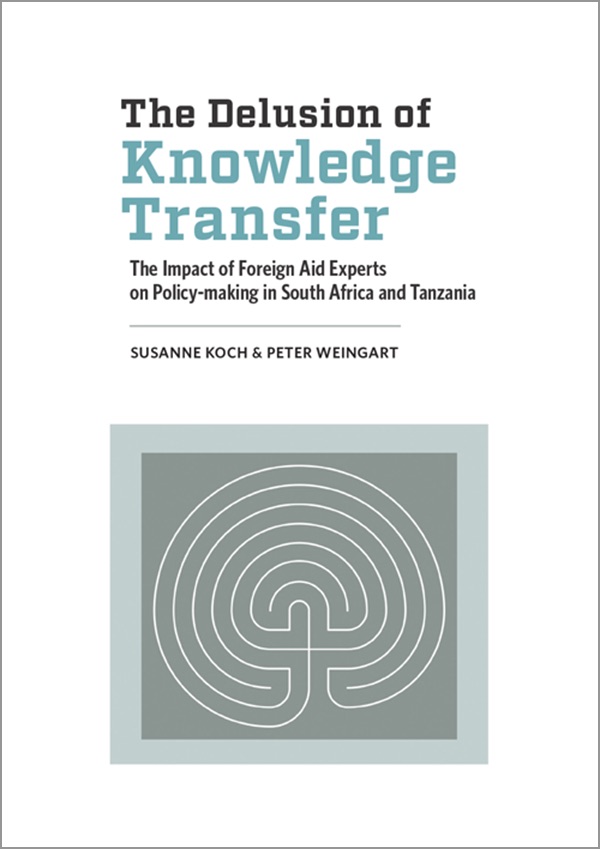
The Delusion of Knowledge Transfer
The Impact of Foreign Aid Experts on Policy-making in South Africa and Tanzania
Book information
- Publisher
- African Minds
- Publication
- Published 3 October 2016
- Place
- Cape Town, South Africa
- Catalogue record
- View in the catalogue
Abstract
With the rise of the ‘knowledge for development’ paradigm, expert advice has become a prime instrument of foreign aid. At the same time, it has been object of repeated criticism: the chronic failure of ‘technical assistance’ – a notion under which advice is commonly subsumed – has been documented in a host of studies. Nonetheless, international organisations continue to send advisors, promising to increase the ‘effectiveness’ of expert support if their technocratic recommendations are taken up. This book reveals fundamental problems of expert advice in the context of aid that concern issues of power and legitimacy rather than merely flaws of implementation. Based on empirical evidence from South Africa and Tanzania, the authors show that aid-related advisory processes are inevitably obstructed by colliding interests, political pressures and hierarchical relations that impede knowledge transfer and mutual learning. As a result, recipient governments find themselves caught in a perpetual cycle of dependency, continuously advised by experts who convey the shifting paradigms and agendas of their respective donor governments. For young democracies, the persistent presence of external actors is hazardous: ultimately, it poses a threat to the legitimacy of their governments if their policy-making becomes more responsive to foreign demands than to the preferences and needs of their citizens.
Where its authors and editors are based
Countries of the institutions the book's authors, editors and chapter authors were affiliated to when it was published.
- AUTHORS / EDITORS
- CITATIONS Phase 2
- USAGE Phase 3
| Country | Authors / editors |
|---|---|
| Germany | 2 |
About this data
These figures cover 1 work. Each value comes from the most trusted source that has it; a correction made by OBC staff outranks every source.
| Source | Confidence | Works |
|---|---|---|
| Thoth | 90 / 100 | 1 |
| Works with a publication date | 100% |
|---|---|
| Works with a DOI | 100% |
| Works with a funder recorded | 0% |
| Authors with an affiliation | 100% |
| Affiliations matched to an institution (ROR) | 100% |
| Affiliations with a country | 100% |
Countries come from the institution each author was affiliated to when they published, as recorded in ROR. A country is never guessed, so authors without a matched institution are not counted on the maps.
Funders come from OpenAlex for articles and Thoth for books, where publishers recorded them. Most works record none, so a funder's figures show what is recorded, not everything it funded.
Chapters count as works: their authors and editors, and the countries of their institutions, are in every figure where Thoth records an affiliation for them.
Citations (Phase 2) and usage (Phase 3) are not collected yet.