
Book view
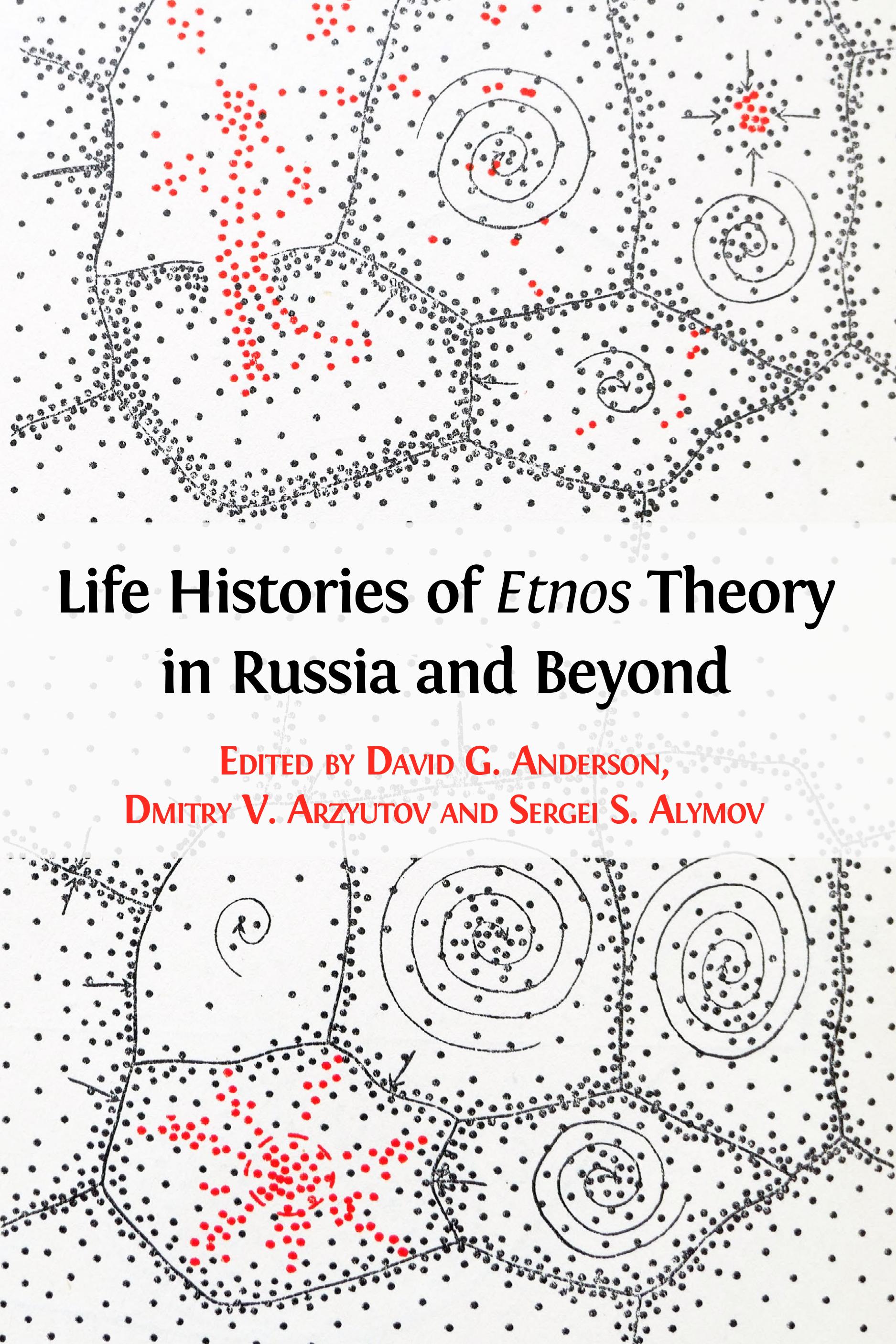
Life Histories of Etnos Theory in Russia and Beyond
Edited by David G. Anderson, Dmitry V. Arzyutov, Sergei S. Alymov
Book information
- Publisher
- Open Book Publishers
- Publication
- Published 6 February 2019
- Place
- Cambridge, UK
- Catalogue record
- View in the catalogue
Abstract
The idea of etnos came into being over a hundred years ago as a way of understanding the collective identities of people with a common language and shared traditions. In the twentieth century, the concept came to be associated with Soviet state-building, and it fell sharply out of favour. Yet outside the academy, etnos-style arguments not only persist, but are a vibrant part of regional anthropological traditions. Life Histories of Etnos Theory in Russia and Beyond makes a powerful argument for reconsidering the importance of etnos in our understanding of ethnicity and national identity across Eurasia. The collection brings to life a rich archive of previously unpublished letters, fieldnotes, and photographic collections of the theory’s early proponents. Using contemporary fieldwork and case studies, the volume shows how the ideas of these ethnographers continue to impact and shape identities in various regional theatres from Ukraine to the Russian North to the Manchurian steppes of what is now China. Through writing a life history of these collectivist concepts, the contributors to this volume unveil a world where the assumptions of liberal individualism do not hold. In doing so, they demonstrate how notions of belonging are not fleeting but persistent, multi-generational, and bio-social.
Chapters
Where its authors and editors are based
Countries of the institutions the book's authors, editors and chapter authors were affiliated to when it was published.
- AUTHORS / EDITORS
- CITATIONS Phase 2
- USAGE Phase 3
| Country | Authors / editors |
|---|---|
| United Kingdom | 6 |
| Russia | 2 |
| Sweden | 1 |
| United States | 1 |
About this data
These figures cover 10 works. Each value comes from the most trusted source that has it; a correction made by OBC staff outranks every source.
| Source | Confidence | Works |
|---|---|---|
| Thoth | 90 / 100 | 10 |
| Works with a publication date | 100% |
|---|---|
| Works with a DOI | 100% |
| Works with a funder recorded | 0% |
| Authors with an affiliation | 100% |
| Affiliations matched to an institution (ROR) | 100% |
| Affiliations with a country | 100% |
Countries come from the institution each author was affiliated to when they published, as recorded in ROR. A country is never guessed, so authors without a matched institution are not counted on the maps.
Funders come from OpenAlex for articles and Thoth for books, where publishers recorded them. Most works record none, so a funder's figures show what is recorded, not everything it funded.
Chapters count as works: their authors and editors, and the countries of their institutions, are in every figure where Thoth records an affiliation for them.
Citations (Phase 2) and usage (Phase 3) are not collected yet.