
Book view
The Economics of Cultural Loss
Harm and Resilience in North American Indigenous Communities
Book information
- Publisher
- Open Book Publishers
- Publication
- Published 28 July 2025
- Place
- Cambridge, UK
- Catalogue record
- View in the catalogue
Abstract
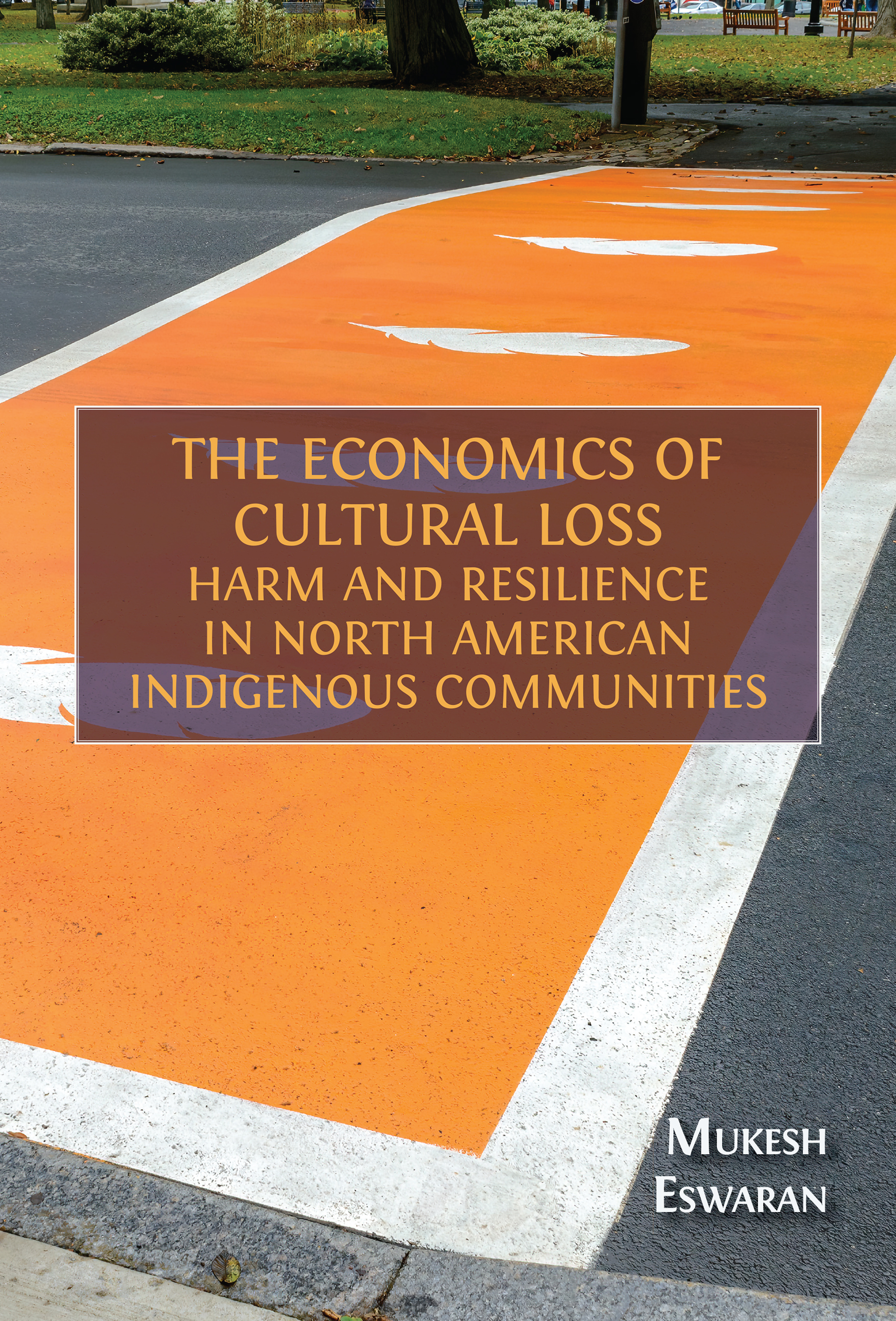
Why do North American Indigenous Peoples face such grave conditions in health, poverty, and mortality—including alarmingly high rates of suicide, alcoholism, and drug abuse? In this groundbreaking book, Mukesh Eswaran confronts these urgent questions through the lens of economics, focusing deeply on an underexplored aspect: the erosion of Indigenous culture. While empirical studies have shed some light on Indigenous struggles, Eswaran argues that mainstream economic theory fails to grasp the unique realities of Indigenous communities. His work introduces innovative models that incorporate cultural and communal values—particularly the sacredness of land and the importance of extended family and communal life—as foundational components of Indigenous well-being.
Eswaran emphasizes that policies rooted in conventional economics, which often ignore culture, are ill-suited to address Indigenous issues, in particular, what has been identified as ‘Deaths of Despair’ among Indigenous Peoples. Drawing from Indigenous scholars and Elders, he shows how historical trauma—passed through generations—has systematically dismantled cultural and communal supports. His theoretical framework helps explain the rise in substance abuse and suicide, and points toward new, culturally sensitive policy approaches. While advancing economic theory relevant to Indigenous issues, the book also proposes a meaningful path toward healing and justice for Indigenous communities. It is a vital read for economists, policymakers, students, and anyone concerned with Indigenous history, well-being, equity and reconciliation.
Chapters
Where its authors and editors are based
Countries of the institutions the book's authors, editors and chapter authors were affiliated to when it was published.
- AUTHORS / EDITORS
- CITATIONS Phase 2
- USAGE Phase 3
| Country | Authors / editors |
|---|---|
| Canada | 1 |
| United States | 1 |
About this data
These figures cover 14 works. Each value comes from the most trusted source that has it; a correction made by OBC staff outranks every source.
| Source | Confidence | Works |
|---|---|---|
| Thoth | 90 / 100 | 14 |
| Works with a publication date | 100% |
|---|---|
| Works with a DOI | 100% |
| Works with a funder recorded | 0% |
| Authors with an affiliation | 100% |
| Affiliations matched to an institution (ROR) | 100% |
| Affiliations with a country | 100% |
Countries come from the institution each author was affiliated to when they published, as recorded in ROR. A country is never guessed, so authors without a matched institution are not counted on the maps.
Funders come from OpenAlex for articles and Thoth for books, where publishers recorded them. Most works record none, so a funder's figures show what is recorded, not everything it funded.
Chapters count as works: their authors and editors, and the countries of their institutions, are in every figure where Thoth records an affiliation for them.
Citations (Phase 2) and usage (Phase 3) are not collected yet.