
Book view
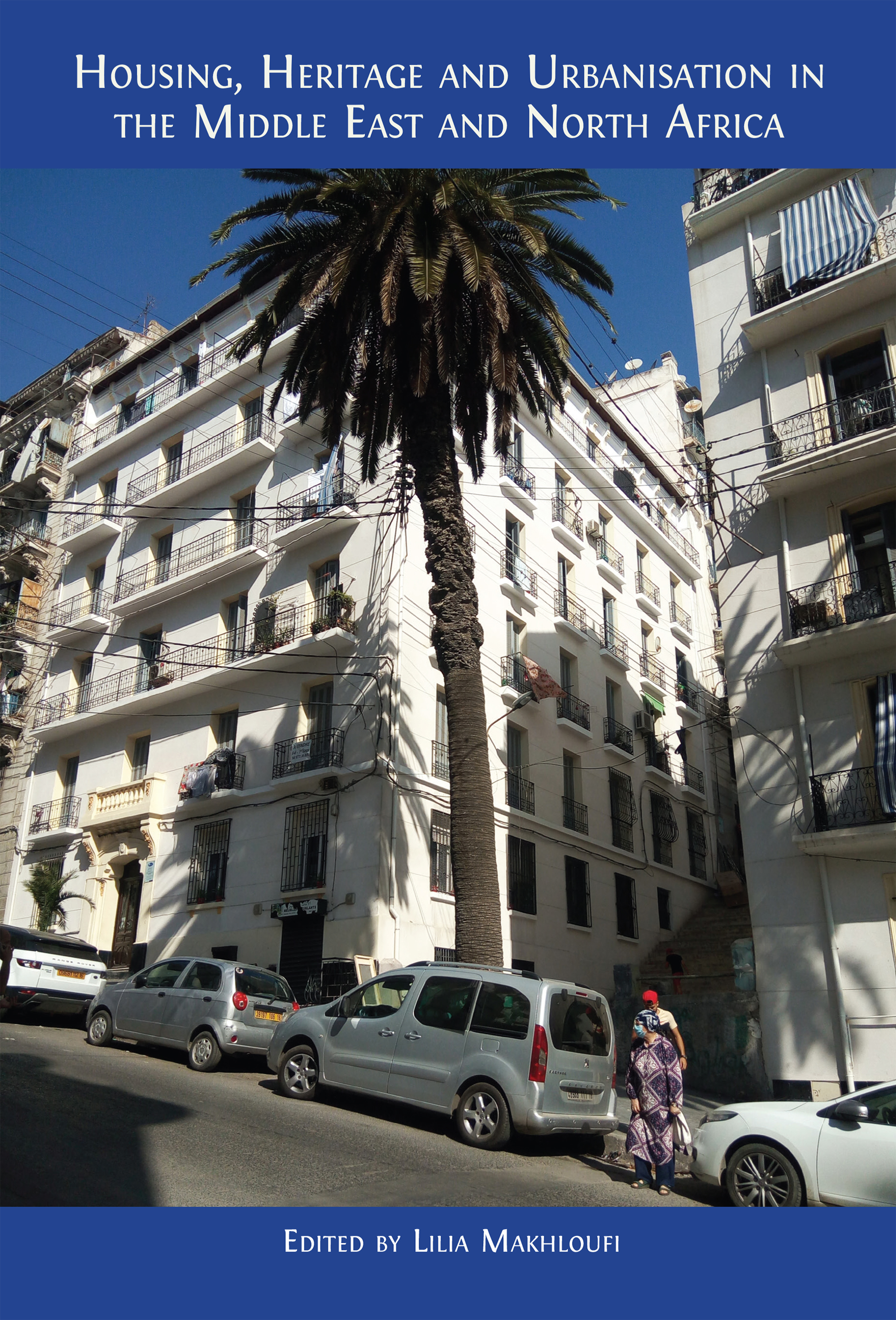
Housing, Heritage and Urbanisation in the Middle East and North Africa
Edited by Lilia Makhloufi
Book information
- Publisher
- Open Book Publishers
- Publication
- Published 3 June 2025
- Place
- Cambridge, UK
- Catalogue record
- View in the catalogue
Abstract
This book explores the interconnection between housing, heritage and urbanisation. Bringing together architects, archaeologists, urban sociologists, urban designers, urban planners and landscape architects, this multi-authored and interdisciplinary volume presents diverse case studies from the Middle East and North Africa, shedding light on the past, present and future of residential spaces.
With its focus to traditional, modern and contemporary housing in Egypt, Iran, Morocco, Syria and Tunisia, Housing, Heritage and Urbanisation in the Middle East and North Africa explores the correlation between architecture, urban planning and society. The contributors critique the impact of rapid urbanisation and global architectural standardisation, which often goes beyond local identity. Instead, they advocate for a sustainable urban development rooted in community needs and cultural heritage.
Ultimately, this volume argues that successful urban planning must balance modernity with tradition, ensuring that housing reflects the lived experiences of its inhabitants. A crucial read for scholars and practitioners, it reaffirms that sustainable cities must be shaped by local needs, not just global trends.
Chapters
Where its authors and editors are based
Countries of the institutions the book's authors, editors and chapter authors were affiliated to when it was published.
- AUTHORS / EDITORS
- CITATIONS Phase 2
- USAGE Phase 3
About this data
These figures cover 12 works. Each value comes from the most trusted source that has it; a correction made by OBC staff outranks every source.
| Source | Confidence | Works |
|---|---|---|
| Thoth | 90 / 100 | 12 |
| Works with a publication date | 100% |
|---|---|
| Works with a DOI | 100% |
| Works with a funder recorded | 8% |
| Authors with an affiliation | 85% |
| Affiliations matched to an institution (ROR) | 73% |
| Affiliations with a country | 91% |
Countries come from the institution each author was affiliated to when they published, as recorded in ROR. A country is never guessed, so authors without a matched institution are not counted on the maps.
Funders come from OpenAlex for articles and Thoth for books, where publishers recorded them. Most works record none, so a funder's figures show what is recorded, not everything it funded.
Chapters count as works: their authors and editors, and the countries of their institutions, are in every figure where Thoth records an affiliation for them.
Citations (Phase 2) and usage (Phase 3) are not collected yet.