
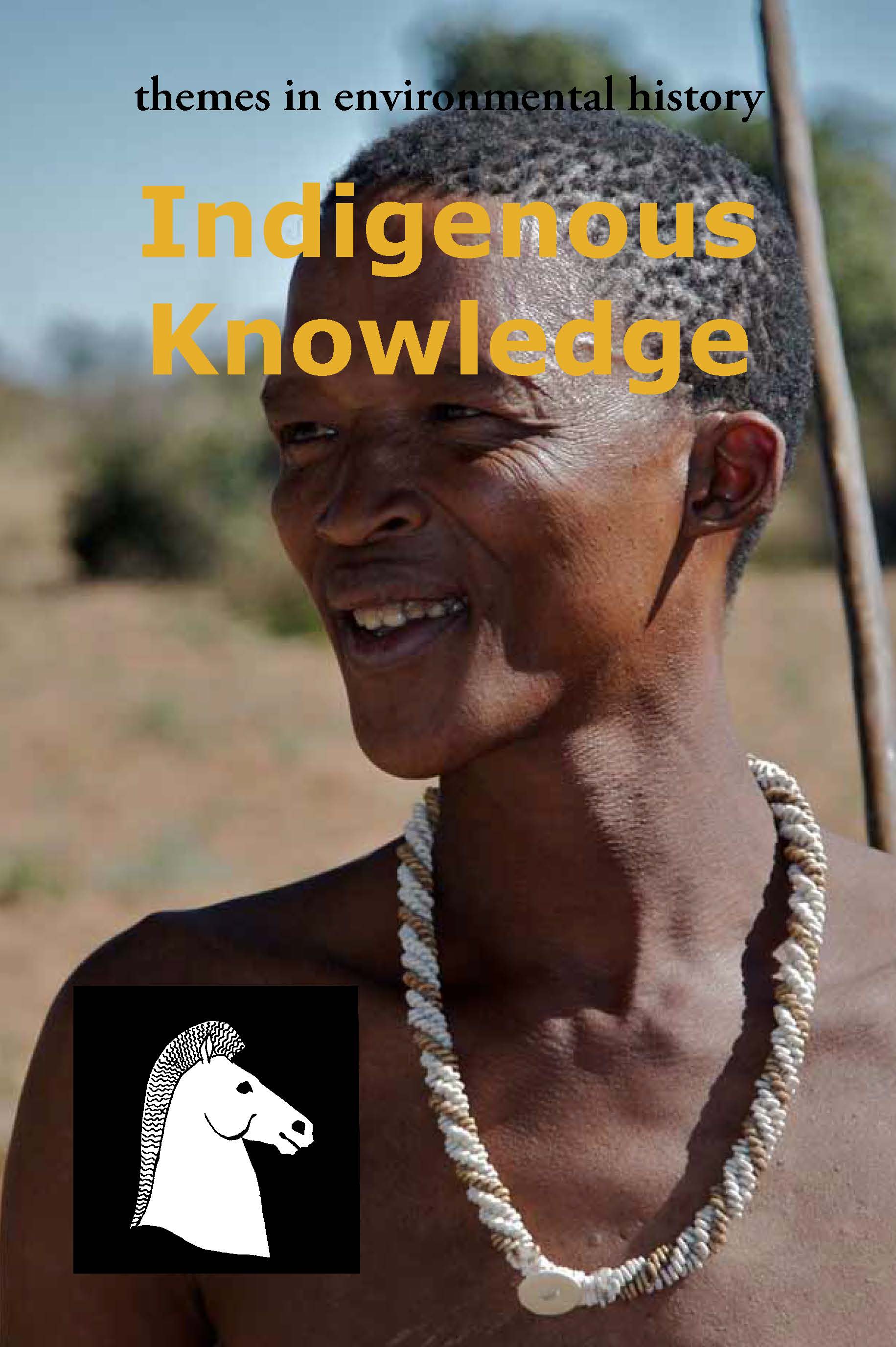
Book information
- Publisher
- White Horse Press
- Publication
- Published 31 March 2012
- Place
- Winwick, UK
- Catalogue record
- View in the catalogue
Abstract
The third entry in the reader series, ‘Themes in Environmental History’. Comprising essays selected from our journals, 'Environment and History' and 'Environmental Values', these inexpensive volumes address important aspects of environmental history by means of theoretical essays and case studies. 'Indigenous Knowledge' investigates how indigenous peoples from various cultures interact with and conceptualise their environments, past and present; it offers accounts of indigenous conservation practice and traditional environmental knowledge alongside challenging explorations of how ‘knowledge’ is filtered through ideologies and subjectivities, from the Western scientific worldview to individual memory.
Where its authors and editors are based
Countries of the institutions the book's authors, editors and chapter authors were affiliated to when it was published.
- AUTHORS / EDITORS
- CITATIONS Phase 2
- USAGE Phase 3
No affiliations with a known country in these years yet.
About this data
These figures cover 1 work. Each value comes from the most trusted source that has it; a correction made by OBC staff outranks every source.
| Source | Confidence | Works |
|---|---|---|
| Thoth | 90 / 100 | 1 |
| Works with a publication date | 100% |
|---|---|
| Works with a DOI | 0% |
| Works with a funder recorded | 0% |
| Authors with an affiliation | 0% |
Countries come from the institution each author was affiliated to when they published, as recorded in ROR. A country is never guessed, so authors without a matched institution are not counted on the maps.
Funders come from OpenAlex for articles and Thoth for books, where publishers recorded them. Most works record none, so a funder's figures show what is recorded, not everything it funded.
Chapters count as works: their authors and editors, and the countries of their institutions, are in every figure where Thoth records an affiliation for them.
Citations (Phase 2) and usage (Phase 3) are not collected yet.