
Book view
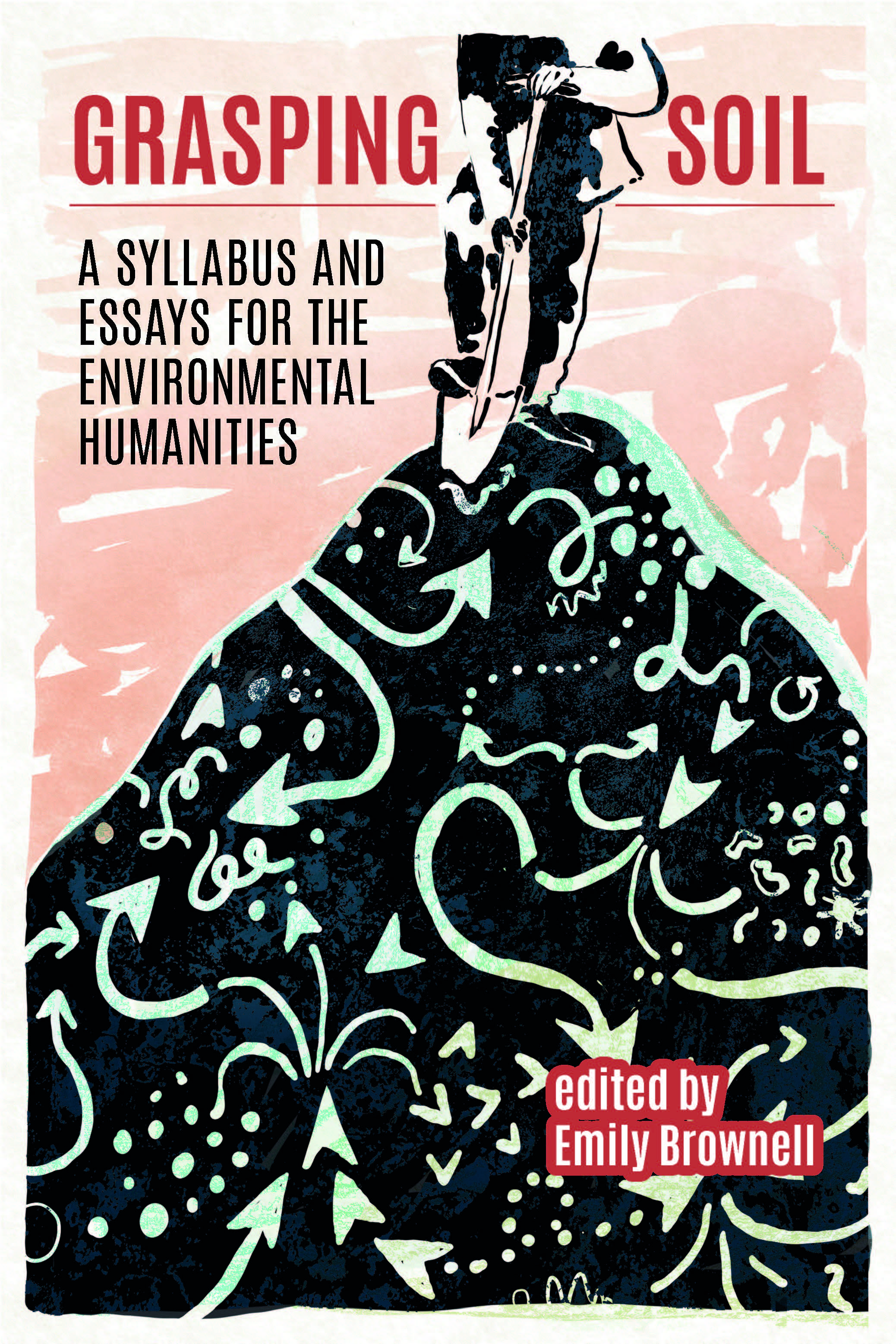
Grasping Soil
A Syllabus and Essays for the Environmental Humanities
Edited by Emily Brownell; by Cynthia Browne, Amiel Bize, Seth Denizen, Dotan Halevy, Basil Ibrahim, Brian Jones, Paul Kurek, Johannes Lehmann, Tamar Novick, Jayson Maurice Porter, Steven Stoll, Lulu Tessua, Natasha Russell
Book information
- Publisher
- White Horse Press
- Publication
- Published 1 March 2026
- Place
- Winwick, Cambs.
- Catalogue record
- View in the catalogue
Abstract
Soil is a nearly ubiquitous presence in our lives, regardless of whether we spend much time noticing it. Soil holds worlds within itself and also builds other worlds; it devours and remakes things; it sustains life and gives cover to the dead. Grasping Soil is a collectively-authored syllabus and series of essays, all examining, with different inflections, the fundamental question: what comes into view when we ‘grasp’ soil as a vessel of human history and point of view for inquiry?
Part I is an interdisciplinary syllabus that traces the contours of a growing body of work in the humanities that uses soil as a bridge between human and more-than-human histories. The syllabus offers a template of readings, discussion questions and assignments with an accompanying website for easy access to the supporting materials. The essays that follow in Part 2 explore particular moments and locations in which communities have modified, depleted or remade soil to suit a particular need. In examining these engagements with soil, each essay provides a particular view on the social, political or economic conditions that they reflect and create. The essays range from mountain top mining in Appalachia to the construction of a load-bearing monolith in Nazi-era Berlin, and the layered, residual histories of agricultural projects in Tanzania. As these essays make clear, soil is a lively presence not an inert recipient of human desires and actions. It is a living and not always governable community with ever-changing stories to tell.
Chapters
| Chapter | Author | Institution at publication |
|---|---|---|
| Introduction | Emily Brownell | University of Edinburgh |
| Appalachia, USA | Steven Stoll | Fordham University |
| Berlin, the Cosmos | Paul Kurek | University of Michigan |
| British Mandate Palestine | Tamar Novick | Technical University of Munich |
| Ithaca, New York | Johannes Lehmann | Cornell University; National Academy of Sciences |
| Kwale District, Kenya | Emily Brownell | University of Edinburgh |
| Lusatia, Germany | Cynthia Browne | Max Planck Institute for the History of Science |
| Ndungu, Tanzania | Lulu Tessua | University of Nairobi |
| Part I: Syllabus | ||
| The Gaza Strip, Palestine | Dotan Halevy | Tel Aviv University |
| Unit 1: Soil as Substrate | Cynthia Browne, Johannes Lehmann | Max Planck Institute for the History of Science; Cornell University; National Academy of Sciences |
| Unit 2: Soil as Archive | Amiel Bize, Seth Denizen, Jayson Maurice Porter | Cornell University; Washington University in St. Louis; University of Maryland, College Park |
| Unit 3: Soil as Health | Emily Brownell, Tamar Novick, Lulu Tessua | University of Edinburgh; Technical University of Munich; University of Nairobi |
| Unit 4: Soil as Belonging | Dotan Halevy, Basil Ibrahim, Paul Kurek, Steven Stoll | Tel Aviv University; University of Michigan; Fordham University |
| USA and Mexico | Jayson Maurice Porter | University of Maryland, College Park |
Where its authors and editors are based
Countries of the institutions the book's authors, editors and chapter authors were affiliated to when it was published.
- AUTHORS / EDITORS
- CITATIONS Phase 2
- USAGE Phase 3
| Country | Authors / editors |
|---|---|
| United States | 6 |
| Germany | 2 |
| Israel | 1 |
| Kenya | 1 |
| United Kingdom | 1 |
About this data
These figures cover 16 works. Each value comes from the most trusted source that has it; a correction made by OBC staff outranks every source.
| Source | Confidence | Works |
|---|---|---|
| Thoth | 90 / 100 | 16 |
| Works with a publication date | 100% |
|---|---|
| Works with a DOI | 81% |
| Works with a funder recorded | 6% |
| Authors with an affiliation | 86% |
| Affiliations matched to an institution (ROR) | 100% |
| Affiliations with a country | 100% |
Countries come from the institution each author was affiliated to when they published, as recorded in ROR. A country is never guessed, so authors without a matched institution are not counted on the maps.
Funders come from OpenAlex for articles and Thoth for books, where publishers recorded them. Most works record none, so a funder's figures show what is recorded, not everything it funded.
Chapters count as works: their authors and editors, and the countries of their institutions, are in every figure where Thoth records an affiliation for them.
Citations (Phase 2) and usage (Phase 3) are not collected yet.